
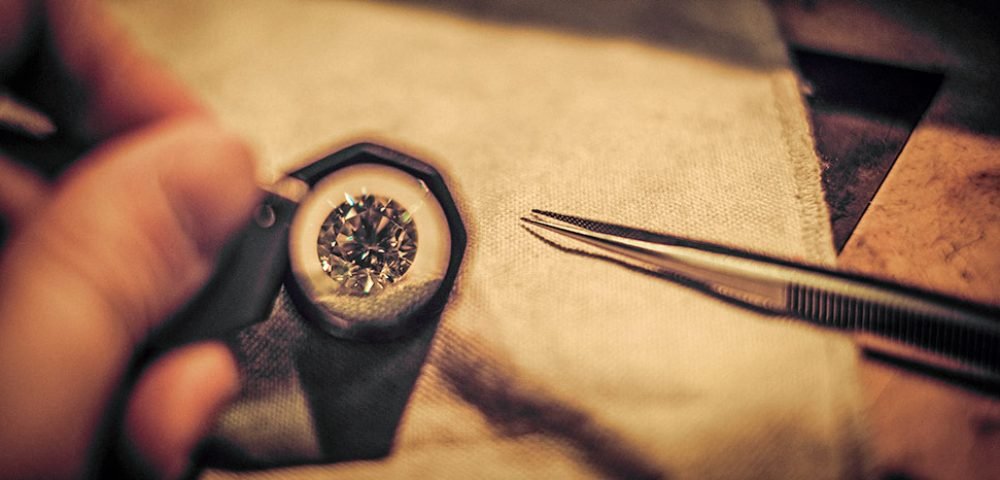
The cut is perhaps the most decisive element in the beauty of a diamond. Beyond colour, clarity or carat, it is the way the stone has been cut that determines its brilliance, its personality and the way it reflects light. The same rough diamond can become a jewel of infinite sparkle or a soft, romantic glow, depending on the style of cut chosen.
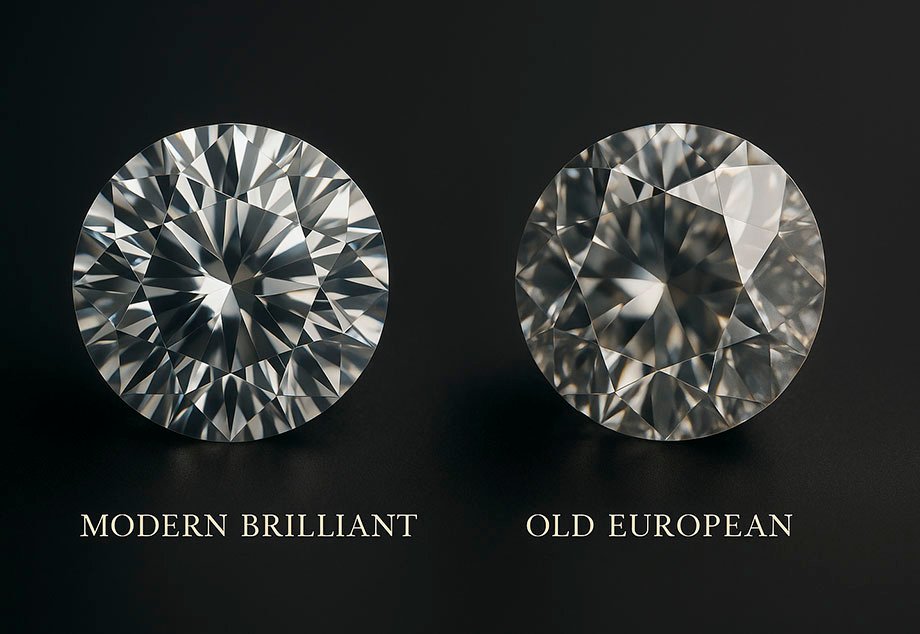
Throughout history, master carvers have given life to different shapes and styles, from ancient cuts such as the Old Mine or the Old Europeanwith its handcrafted charm and ample flashes of light, to the shiny modernmathematically optimised to return the maximum amount of light. Among them we also find iconic carvings such as the Asscherthe emerald or the marquiseeach with its own character and aesthetic language.
Today, in the midst of the conscious luxury and the search for pieces with historyIn the past, antique cuts have come back into the limelight, coexisting with contemporary styles and offering each person the possibility to choose a diamond not only for its value, but also for what it expresses.
In this complete guide we will explore the main diamond cutsTheir visual differences, advantages and disadvantages, as well as the trends that mark their comeback. A journey designed to help you understand what lies behind the brilliance of each gemstone.
What does the cut of a diamond really mean?
When we talk about the "cut" of a diamond, we usually think of its shape - round, oval, square - but in reality the term encompasses something much more complex and decisive: the way in which the stone has been carved to interact with light.
A cut is not just geometry; it's the balance between proportions, symmetry and polish. These three factors determine how light travels within the diamond and how it returns to our eyes in the form of brilliance.
- ProportionsThe relationship between table, crown, pavilion and girdle. A diamond that is too deep or too flat will lose light, and therefore some of its beauty.
- SymmetryThe precision in the arrangement of the facets. A symmetrical carving ensures that the flashes are balanced and harmonious.
- PolishingThe finish of each facet. A good polish allows the light to flow unhindered, enhancing brilliance and fire.
Visual effects
In the language of jewellery, the above three factors translate into different visual effects:
- Brightnesswhite light reflecting from the surface and the interior.
- Fire: the flashes of colour that appear when light is broken down.
- ScintillationThe play of flashes and shadows produced by moving the stone.
It is the combination of these effects that gives a diamond its "life". That's why, even with excellent colour or flawless clarity, a poorly cut diamond can appear dull.
Cutting grade
The Gemological Institute of America (GIA)the world authority on gemmology, awards a degree of cut that goes from Excellent a PoorThe geometry of the round brilliant diamond has been studied and standardised to the millimetre.
For the so-called fancy shapes -oval, princess, marquise, emerald, among others- there is no overall "cut grade": the main value is placed on the polishingthe symmetry and, in many cases, direct observation of the stone under different lights.
Technical glossary of diamond cutting
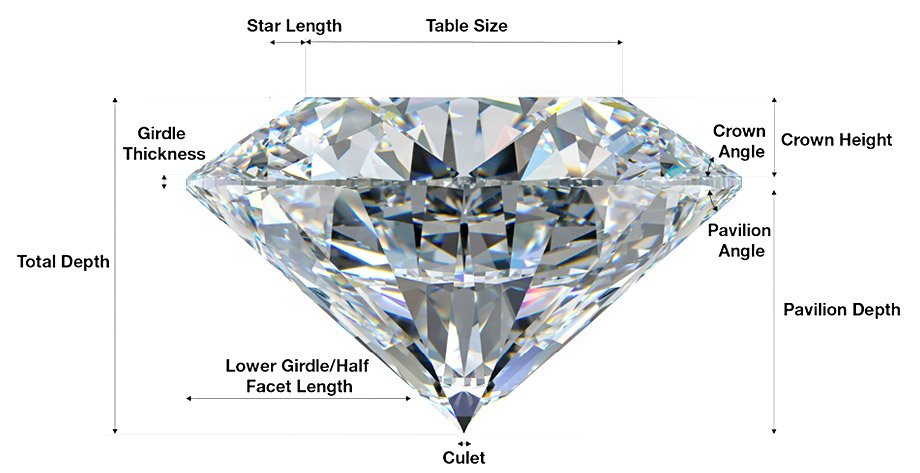
Before delving into the differences between the various cuts, it is useful to familiarise yourself with some technical terms that describe the anatomy and optical behaviour of a diamond. This glossary provides a clear guide to understanding what each part of the cut means and how it influences its brilliance and personality.
|
Term |
Definition |
Relevance in the cut |
| Table | Flat top face, the largest face of the diamond. | It allows the main entrance and exit of light; its size affects brightness and proportions. |
| Crown/Crown | Top of the diamond, between the table and the girdle. | Influences "fire" (flashes of colour) and light scattering. |
| Girdle/Girdle | Border separating the crown from the pavilion. Can be polished, faceted or unpolished. | It provides structural stability and serves as an anchor for the crimp. |
| Pabelló/Pavilion | Lower part of the diamond, below the girdle. | Their depth and angle determine the light return and thus the overall brightness. |
| Culet | Small tip or facet at the base of the pinna. | In older cuts it is usually large and visible; in modern cuts it tends to be small or non-existent. |
| Facets | Flat surfaces carved into the stone. | Their number, size and arrangement determine the pattern of glitter and sparkle. |
| Brightness/Brightness | White light reflected internally and externally. | Excellent cut = maximum gloss. |
| Fire/Fire | Play of rainbow colours by decomposing white light. | High crowns and well-polished facets add to the fire. |
| Scintillation/Scintillation | Flashing effect when moving the stone. | Major in modern shiny cuts with many facets. |
| Step cut | Type of cut with facets in the form of "steps" parallel to the girdle (e.g. emerald, Asscher). | Less glare, more emphasis on clarity and long reflections. |
| Brilliant cut | Cut with triangular/rhomboidal facets arranged to maximise brilliance (e.g. round brilliant, oval, princess). | Maximum intensity of brilliance and scintillation. |
| Bow-tie effect | Dark shadow in the shape of a bow tie in the centre of oval, pear or marquise cuts. | A marked bow-tie indicates poor pavilion proportion. |
| Proportions | Relationship between table, crown, pavilion and girdle. | They define the cut grade and the visual quality of the stone. |
| Hall of mirrors | Optical effect characteristic of step cuts (especially emerald and Asscher). | It produces wide and elegant reflections, with the appearance of infinite mirrors. |
Antique diamond cuts
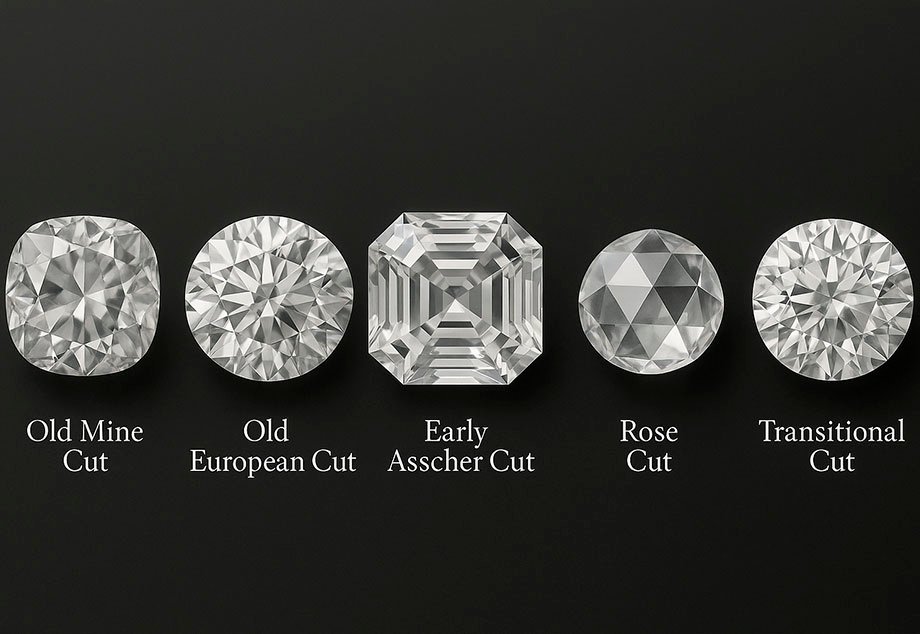
Before diamond cutting became a highly standardised process, artisans worked each stone by hand with the intention of preserving as much of its weight as possible and bringing out its brilliance in the dim light of candles or gas lamps. The result was cuts that were less symmetrical than modern ones, but full of character and unmistakable radiance.
Today, these antique cuts are not only appreciated for their historical value, but also for the unique aesthetics they offer: wide flares, slower rhythms of light and a handcrafted feel that makes them unrepeatable.
Old Mine Cut
The Old Mine Cut is one of the first standardised carving styles, popular in the 18th and 19th centuries. Its shape is reminiscent of a square cushion with rounded cornersThe result of cutting the diamond following the natural shape of the rough crystal.
- Distinctive featuressmall table, high crown, deep pavilion and a large, visible culet.
- Visual effectsoft glow, with wide and romantic sparkles, ideal for dimly lit environments.
- Current attractivenesshighly prized in vintage rings and in vintage jewelleryThe unique and authentic character it brings.
Old European Cut
The Old European Cut (OEC) emerged at the end of the 19th century when the first printing machines for bruting allowed diamonds to be cut in a more rounded shape. It is the direct ancestor of the modern brilliant.
- Distinctive featuresRound cut, small table, high crown, reduced culet and more symmetry than the Old Mine.
- Visual effect: wide and slow flashes, with a more balanced brightness.
- Current attractivenessassociated with late Victorian and Edwardian jewellery, it is one of the most sought-after antique carvings for its romantic air.
Early Asscher
Designed in 1902 by Joseph AsscherThis square-octagonal cut has become an emblem of the Art Deco. It is a step cutThis means that its facets are rectangular and parallel to the girdle, creating an architectural effect.
- Distinctive featureslarge, symmetrical facets, octagonal appearance, great depth.
- Visual effectThe famous "hall of mirrors", with wide and elegant reflections.
- Current attractivenessThe classic of fine jewellery, perfect for those in search of geometric sophistication and Art Deco style.
Rose Cut
The Rose Cut is one of the oldest carvings, documented since the 16th century. Its name comes from its "faceted dome" shape, which resembles the petals of a rose.
- Distinctive featuresflat base, without pavilion, triangular facets forming a dome.
- Visual effectsoft and diffused lustre, without the intense sparkle of modern carvings.
- Current attractivenessThe most popular type: widely used in historical and renaissance jewellery, today it is revalued in minimalist designs because of its low profile and ethereal appearance.
Transitional Cut
The Transitional Cut appeared in the first decades of the 20th century as an intermediate step between the Old European and the brilliant modern.
- Distinctive features: wider table and smaller culet than in the OEC, greater symmetry and better use of light.
- Visual effectcombines broad flashes with a more refined sparkle.
- Current attractivenessrare and highly prized by collectors, it symbolises the transition to modern carving.
The modern brilliant round: the cut that changed everything
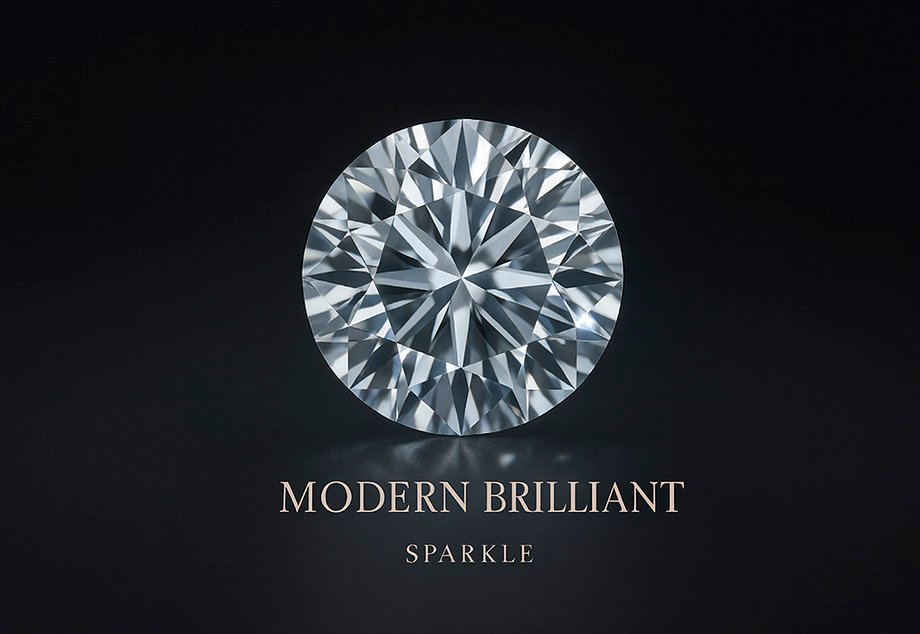
If there is one cut that has marked the history of jewellery, it is the round modern glossy. Its popularity is no accident: it is the cut that makes the best use of light and offers the best balance between brilliance, fire and sparkle.
Mathematical perfection
In 1919, the engineer and gemmologist Marcel Tolkowsky published a pioneering study in which he defined the ideal proportions for a round diamond. His aim was to ensure that the light entering the stone was optimally reflected and exited through the top, thus multiplying its brilliance. Those mathematical formulas laid the foundation for what we know today as the modern brilliant.
Over time, the milling machinery was perfected, allowing increasingly precise and symmetrical cuts. In 2005, the Gemological Institute of America (GIA) introduced its cut classification system (cut grade), which assesses factors such as proportions, symmetry and polish on a scale from Excellent a Poor.
Thus, the shiny round thus became the single cut-off with a standardised cut-off gradewhich consolidated it as a world reference.
Unique appeal
- Maximum brightnessno other outage brings back the light with such intensity.
- Versatilityis the most common size for engagement rings and fine jewellery.
- Impeccable symmetryThe 57 or 58 facets are designed to achieve the highest possible scintillation.
Scientific accuracy
The perfection of the modern round brilliant has made it the most sought-after cut and often also the most expensive per carat. However, that same perfection means that, compared to the older cuts, it can be less unique.
If the Old Mine or the Old European tell the story of a craftsman's work, the modern glossy is the symbol of scientific precision applied to beauty.
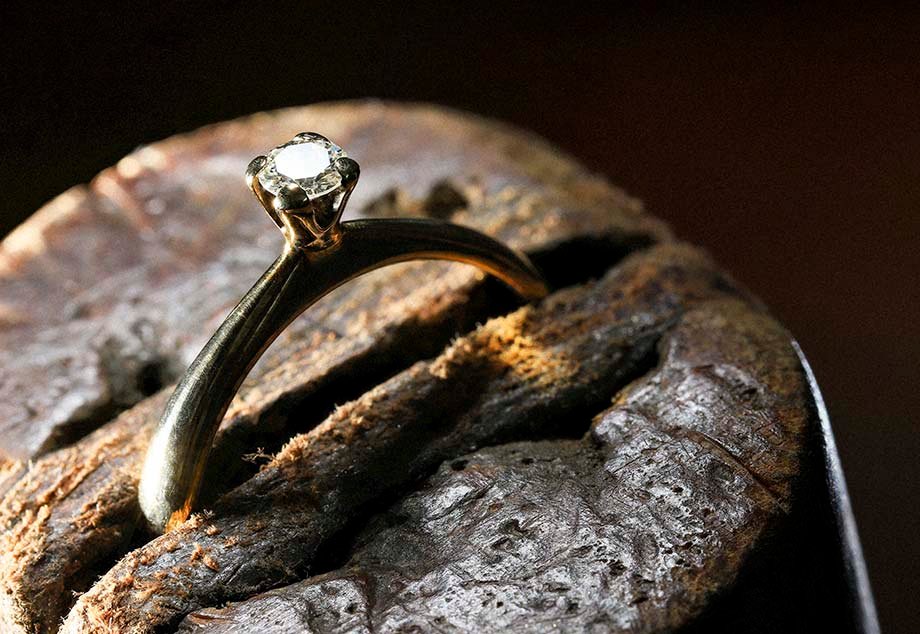
At Taller de Orfebres we advise you personally to choose the perfect ring: from antique cuts to modern reinterpretations, family restorations or custom designs. Make an appointment and discover how we can create your unique jewellery.
Diamond cuts Fancy shapes
While the round brilliant-cut is the standard, contemporary jewellery has been enriched with a range of cuts known as fancy shapes. These sizes offer shapes other than circles and bring new aesthetic possibilities, from bold, modern geometries to romantic, streamlined silhouettes.
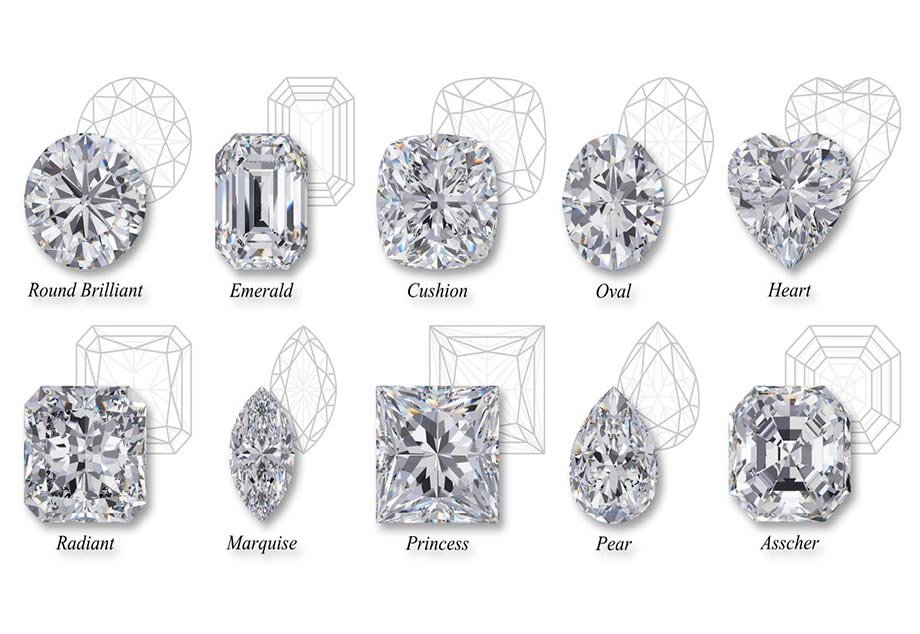
Princess
Created in 1981, the princess cut is square with pronounced corners and a brilliant faceting that combines modernity and great intensity of light.
Radiant
Designed in 1977 by Henry Grossbard, the radiant cut combines the elegance of step cuts with the sparkle of brilliant, in a rectangular or square shape with bevelled corners.
Oval
Popularised in the 1960s, the oval cut offers a high shine and an elongated silhouette that slims the hand and adds visual presence.
Marquise
Commissioned by King Louis XV in the 18th century, the marquise cut is notable for its elongated shape and pointed ends, which maximise the perception of size.
Pear
Also known as teardrop cut, it combines the roundness of the brilliant cut with the stylisation of the marquise, achieving an original and elegant look.
Heart
One of the most symbolic and romantic sizes, the sweetheart cut requires expert execution to maintain the perfect symmetry of its characteristic silhouette.
Esmeralda
Of classical origin and very popular in Art Deco jewellery, the emerald cut is rectangular with bevelled corners and a staircase faceting that highlights the clarity of the stone.
Modern Asscher
Redesigned in the early 2000s, the modern Asscher retains its square octagonal shape, but with greater depth and symmetry, achieving a hypnotic effect of infinite mirrors.
Pros and cons of each cut
When it comes to choosing a diamond, there is no absolute "best" cut: each cut has its own virtues and limitations, and understanding them is key to finding the one that suits you best.
Below, we offer you a comparison of the main pros and cons of each cutto help you make an informed judgement on aspects such as brightness, aesthetics, ergonomics and value before making a decision.
Old cuts
- Old Mine CutVintage: gives an unmistakable vintage feel, with wide, romantic sparkles. They are often more affordable in price per carat and each piece is unique. However, their lustre is softer than that of a modern cut and the large culet may be visible in some settings.
- Old European Cutelegant and balanced, it is perfect for those looking for a classic look with historical character. Its sparkle is wider than a modern brilliant, but shows more of the colour and can be less bright under intense light.
- Old AsscherArt Deco icon, ideal for lovers of geometry. It offers a hypnotic visual effect, but demands high clarity, as the inclusions are easily visible.
- Rose CutThe low profile and romantic, ethereal air make it stand out. It is comfortable to wear, although its sheen is subdued and lacks the sparkle of modern sizes.
- Transitional CutThe best of antique and modern, with enhanced symmetry and optimised brilliance. They are rare, which increases their appeal to collectors.
The modern round brilliant
The modern glossy is the standard par excellence: it provides the maximum brightness and sparkleversatility in any setting and the backing of the GIA grading system. Its main drawback is that, as the most common size, it can be less unique and tends to have a higher price per carat than other shapes.
Modern fancy shapes
The fancy shapes allow each jewel to speak a different language: some prioritise brilliance, others geometric elegance or symbolic expressiveness. They are, in short, the most creative expression of diamond cutting in modern jewellery.
- PrincessModern and geometric, it combines a high gloss with a more favourable price than the round one. However, its corners are delicate and require protection.
- RadiantThe strength of a square is combined with the luminosity of a brilliant, concealing the inclusions well. Its weakness is that, in too deep cuts, it can appear smaller.
- OvalThe hand is slimmer and appears larger. In return, it is prone to the dreaded bow-tie effect if it is not well carved.
- Marquisedramatic and distinguished, it maximises the apparent caratage. Its tips, however, are fragile and the length to width ratio is difficult to balance.
- Pearoriginal and elegant, it combines the best of oval and marquise. Its challenge lies in achieving perfect symmetry and avoiding a bow-tie very marked.
- Heartsymbolic and romantic, but complex to execute. It only fully shines if the carving is impeccable, and it is not always easy to find harmonious proportions.
- Emerald and modern AsscherThe "mirror effect" or "mirror effect": they offer a sober and sophisticated shine, with the famous "mirror effect" or "mirror effect". hall of mirrors. They require stones of high clarity, as their broad facets reveal any inclusions.
Carving the light
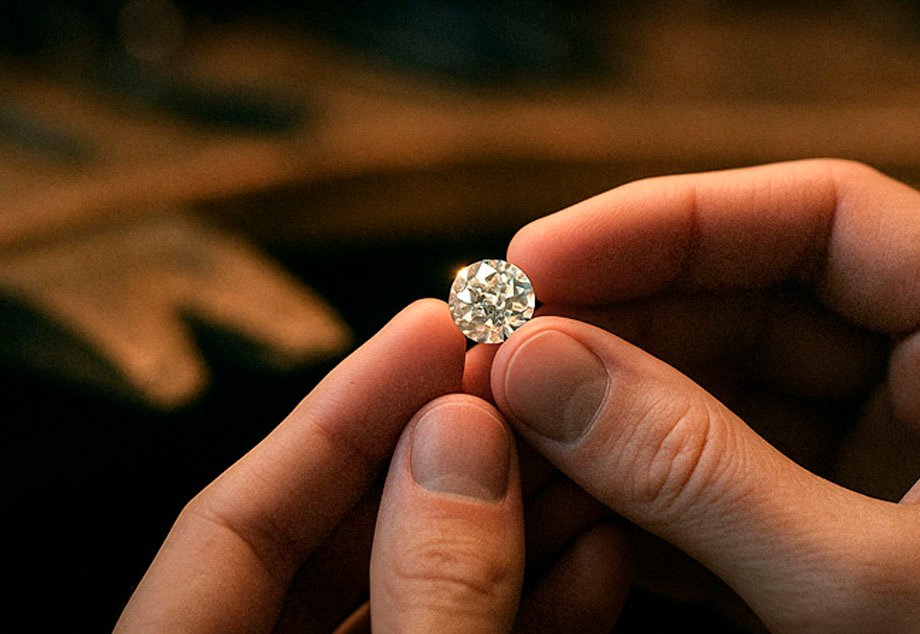
For decades, the mathematical perfection of the modern brilliant set the standard for the ideal. In recent years, however, antique cuts have made a strong comeback, reclaiming their place in the fine jewellery. Its appeal goes beyond nostalgia: it responds to a profound change in our understanding of beauty and luxury.
The return of vintage elegance in jewellery reflects that contemporary sensibility that values subtlety, history, the singular and the intentional. Thus, antique and modern diamonds coexist today not as opposites, but as complementary expressions of the same art: cutting light.
Because choosing a cut isn't just about choosing a shape, it's about deciding what kind of glow you want to carry with you - one that dazzles, one that excites, or one that simply speaks of you.
